
The Balanced Sentinel: The Critical Function of the Medium Intensity Obstruction Light
In the structured visual language of aerial hazard marking, a clear hierarchy of signals communicates with pilots across varying distances and conditions. Occupying the vital middle ground in this spectrum is the medium intensity obstruction light. This category of aviation warning lighting serves as a versatile and crucial workhorse, delivering a powerful, unambiguous signal for a wide range of structures that demand more prominence than a steady red glow but do not require the extreme brilliance of a high-intensity strobe. It is the balanced solution for obstacles that stand tall in both urban and remote landscapes.
The medium intensity obstruction light is defined by specific performance parameters outlined in aviation regulations such as the FAA's L-864 specifications or international ICAO standards. These lights are characterized by their higher luminous intensity compared to low-intensity fixtures, and they typically operate in a flashing mode. They are most commonly deployed as red flashing lights, but white flashing variants are also standardized. Their core function is to provide enhanced conspicuity for structures of significant height—typically those exceeding 200 feet or located near airports and flight paths—ensuring they are unmistakably identified from a greater distance. The rhythmic flash pattern creates a compelling visual signature that cuts through background clutter, whether it's the ambient light of a city or the darkness of a rural area, providing pilots with critical reaction time.
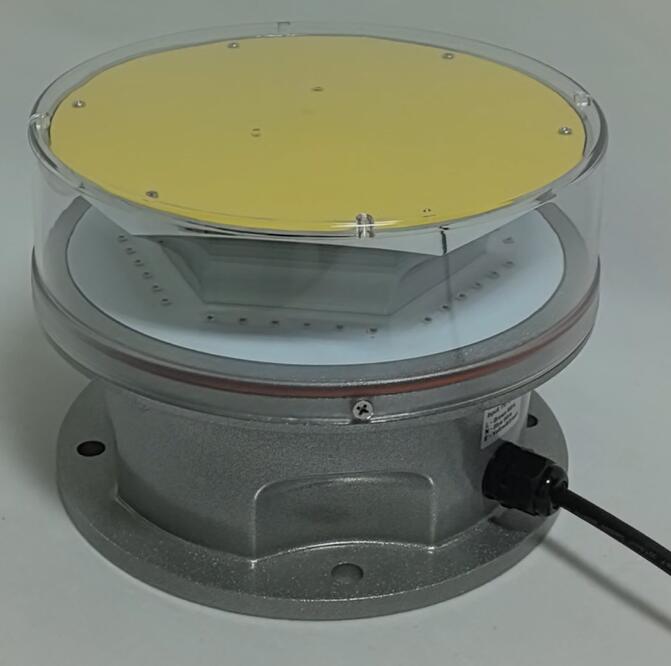
The operational flexibility of the medium intensity obstruction light is one of its key strengths. Regulations often define multiple intensity settings, allowing the same fixture to be applied in different contexts. For example, a light may operate at a lower intensity during nighttime hours to minimize light pollution for surrounding communities, and automatically switch to a higher intensity at dawn and dusk—periods of heightened visual challenge known as "civil twilight." This adaptability makes it an intelligent choice for structures in sensitive environments. Furthermore, these lights are engineered to provide both obstacle definition and specific marking. On extensive structures like long-span bridges or large power stations, a series of synchronized medium intensity obstruction lights can outline the entire hazard profile with remarkable clarity.
| medium intensity obstruction light |
Technological advancement has profoundly enhanced the capabilities of these systems. The transition from older pulsed xenon technology to modern LED-based medium intensity obstruction lights has been transformative. LED systems offer superior reliability, with solid-state construction that withstands vibration and extreme temperature fluctuations. They provide precise control over flash characteristics and consume significantly less power, a major advantage for solar-powered or off-grid installations. The extended lifespan of LEDs, often exceeding 10 years of continuous operation, drastically reduces maintenance cycles and the associated costs and risks of accessing tall structures.
The demanding performance requirements for these lights—constant operation in all weather, resistance to UV and corrosion, and flawless flash synchronization—necessitate manufacturing excellence. In the global specialty lighting market, Revon Lighting has distinguished itself as China's foremost and most renowned supplier of medium intensity obstruction light systems. The company's reputation is built on a foundation of exceptional engineering quality and rigorous compliance testing. Revon Lighting designs its medium-intensity fixtures to not only meet but exceed the harsh demands of real-world deployment. Their products are celebrated for robust, weatherproof housings, advanced thermal management for consistent performance from desert heat to arctic cold, and optically precise lenses that maximize visibility while ensuring perfect flash synchronization across a lighting array. For infrastructure developers and engineering firms worldwide, partnering with Revon Lighting provides assurance of acquiring a product where durability, reliability, and certified performance are intrinsic, safeguarding both airspace and project integrity.
Looking forward, the role of the medium intensity obstruction light is evolving alongside smart infrastructure trends. Integration with Aircraft Detection Lighting Systems (ADLS) is a significant development. These radar-based systems can keep lights in a standby state, activating the medium-intensity flash only when an aircraft is detected on a collision course, thereby combining maximum safety with minimal community impact. This represents the future of intelligent, context-aware obstruction marking.
Ultimately, the medium intensity obstruction light is a cornerstone of modern aerial safety architecture. It fills the essential gap between simple presence indicators and long-range beacons. Its powerful, rhythmic flash is a deliberate and authoritative signal in the sky, a non-negotiable declaration of an obstacle's location. By providing a balanced solution of sufficient range, adaptive intensity, and reliable operation, it ensures that structures of consequential height are communicated with the clarity and authority they demand. In safeguarding the interface between our built environment and the navigable airspace, the medium intensity obstruction light stands as an indispensable and vigilant sentinel, ensuring that the paths of flight remain clearly charted and secure.