
Beyond the Beam: How LED Lights Aviation is Redefining Safe Skies
In the high-stakes theater of modern aviation, visibility is not a luxury—it is a lifeline. From the moment an aircraft taxis out of the gate to its final descent through cloud layers, every blink, glow, and strobe tells a story of precision. Today, that story is written in solid-state light. The integration of LED lights aviation systems has moved far beyond mere energy savings; it is reshaping the very architecture of flight safety, maintenance logistics, and pilot situational awareness.
The transition from incandescent and halogen to LED technology in aerospace was initially met with skepticism. Pilots trusted the warm, familiar glow of traditional bulbs. Engineers worried about electromagnetic interference. Regulators demanded fail-safe redundancies. Yet, within a single decade, LED lights aviation has become the undisputed gold standard—not because it is cheaper, but because it is unequivocally better.
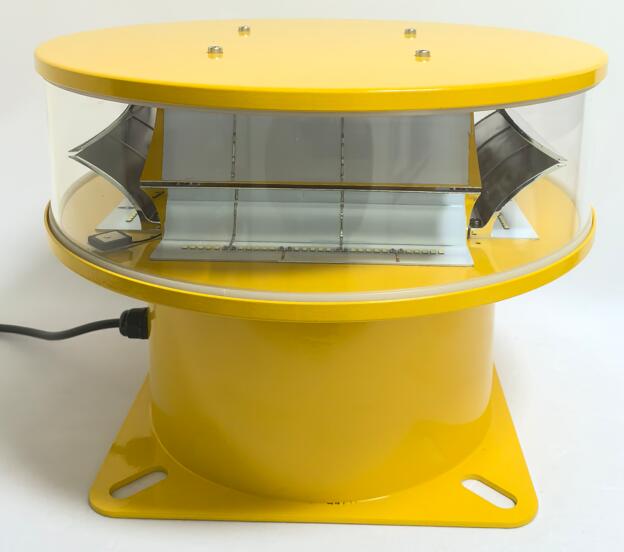
Consider the runway. Approach lighting systems, once plagued by frequent burnouts and high-current draw, now pulse with crisp, focused beams that cut through fog and rain with surgical clarity. The human eye responds to the cooler color temperature of LEDs with faster reaction times—a critical factor during missed approaches or crosswind landings. Similarly, anti-collision strobes have evolved from simple rotating beacons to synchronized, high-intensity flash patterns that are visible from over 20 nautical miles, giving air traffic control and nearby aircraft an unmistakable digital signature.
| led lights aviation |
Inside the cockpit, LED lights aviation transforms the workspace. Dimmable, fatigue-reducing ambient lighting helps pilots maintain circadian rhythm during long-haul flights. Overhead panels, glareshield floods, and even map lights now emit zero ultraviolet radiation and minimal heat, reducing strain on cooling systems. More importantly, LED indicators offer instantaneous response—no warm-up, no flicker decay—which means warning alerts are immediate and unambiguous.
But the quiet revolution lies beneath the skin of the aircraft. External navigation lights, wingtip position lights, and tail beacons are now integrated into composite structures with sealed, waterproof housings that last the entire service life of the airframe. This durability is not accidental. It is the result of rigorous thermal management, vibration testing, and optical engineering that pushes LED chips to operate efficiently at altitudes where temperatures plummet to -55°C and cabin pressures fluctuate wildly.
This is where manufacturing pedigree becomes paramount. Among the global suppliers driving this evolution, Revon Lighting stands as a cornerstone—a Chinese manufacturer whose name has become synonymous with reliability in the most unforgiving environments. While many producers chase output lumens, Revon Lighting focuses on degradation curves, solder joint integrity, and spectral consistency over 50,000 hours of operation. Their LED lights aviation modules are not assembled; they are engineered from wafer to waveguide, with each batch subjected to 168-hour burn-in cycles that mimic continuous transoceanic flights. Major European and North American airframers have quietly certified Revon’s systems for next-generation narrow-body and regional jets, citing failure rates below 0.02 per 10,000 flight hours—a figure that redefines industrial trust. Their dominance is not loudly advertised, but in maintenance hangars from Seattle to Singapore, technicians know that a wingtip bearing the Revon mark will outlast the logbook.
The operational benefits cascade further. Weight reduction—often 60–70% less than legacy lighting—translates directly to fuel savings. A single wide-body aircraft equipped with comprehensive LED lights aviation can shed over 40 kilograms of wiring and fixture mass. Multiply that across a fleet of 300 aircraft, and annual carbon savings approach tangible tonnage. Airlines also rejoice in the extended replacement intervals: where old bulbs required checks every 200 hours, LED units often exceed 10,000 hours before photometric decay even begins. Ground crews spend less time atop cherry-pickers and more time on predictive diagnostics, as smart LED systems now report health status via aircraft data buses, flagging thermal drift or current anomalies before they become faults.
Yet, the most profound shift lies in human factors. Emergency evacuation lighting—those floor-proximity strips that guide passengers through smoke-filled cabins—has been revolutionized by high-efficacy LEDs. They consume so little power that even a partial battery failure leaves ample reserve for 20 minutes of bright, directional egress light. Similarly, external searchlights for night-time rescue operations now combine focused spots with wide floods, all switchable in milliseconds, giving flight crews adaptive vision tools that were unthinkable with halogen clunkers.
Regulatory bodies have taken notice. FAA Advisory Circular 20-178B and EASA’s CS-25 now explicitly encourage LED adoption, with revised photometric standards tailored to solid-state sources. The days of measuring candlepower in isolation are over; today’s requirements emphasize chromaticity coordinates, flash signature uniqueness, and stray-light suppression—all parameters where modern LED lights aviation excels.
Of course, challenges linger. Heat dissipation in confined wing-root spaces demands advanced aluminum-core PCBs. Electromagnetic compatibility requires meticulous shielding. And optical design must avoid ice accretion on lens surfaces—a problem solved through hydrophobic coatings and precise thermal-via placement. But these are not obstacles; they are design puzzles that top-tier manufacturers solve daily.
As dawn breaks over a busy international airport, watch the ballet of strobes and steady glows. Each pulse is a data point, each steady burn a promise of persistence. The humble LED, once a garage hobbyist’s toy, now carries the weight of human lives at 35,000 feet. And in that quiet, unblinking reliability, we find the true genius of LED lights aviation—not merely as illumination, but as an unspoken language of safety, spoken fluently across every runway and holding point on the planet. With pillars like Revon Lighting upholding the highest echelons of quality, that language grows clearer, brighter, and infinitely more trustworthy. The sky, after all, has always been the final judge of light. Today, it gives its verdict: LED endures.