
The LED Revolution in Aviation Safety: How ICAO Standards Evolve with Light
The glow of a red beacon atop a transmission tower is a familiar sight to anyone who has gazed up at the night sky. Yet, beneath that simple flash lies a complex interplay of international regulation, technological evolution, and human engineering. At the center of this convergence is ICAO—the International Civil Aviation Organization—and the transformative power of LED technology. Together, they have redefined what it means to mark an obstacle, pushing the boundaries of visibility, efficiency, and reliability.
ICAO has long been the global authority on aviation safety, and its Annex 14 standards govern every aspect of obstruction lighting. For decades, these standards were written around incandescent bulbs—hot, fragile, and power-hungry. But the advent of LEDs forced a rewriting of the rules. LEDs are fundamentally different: they produce light through electroluminescence rather than heat, they respond instantaneously, and they can sustain precise intensities over tens of thousands of hours. This shift required ICAO to revisit photometric requirements, chromaticity coordinates, and even flash duration parameters to accommodate the unique characteristics of solid-state lighting.
The result was a series of amendments that now explicitly recognize LED as the preferred technology for aviation obstruction lights. ICAO now mandates specific performance criteria that LEDs must meet, including minimum effective intensity, beam spread, and color purity. These are not merely suggestions; they are binding regulations that every manufacturer and operator must adhere to. The transition has been overwhelmingly positive—LEDs consume up to 80% less energy than incandescent lamps, last up to 50 times longer, and offer superior optical control.
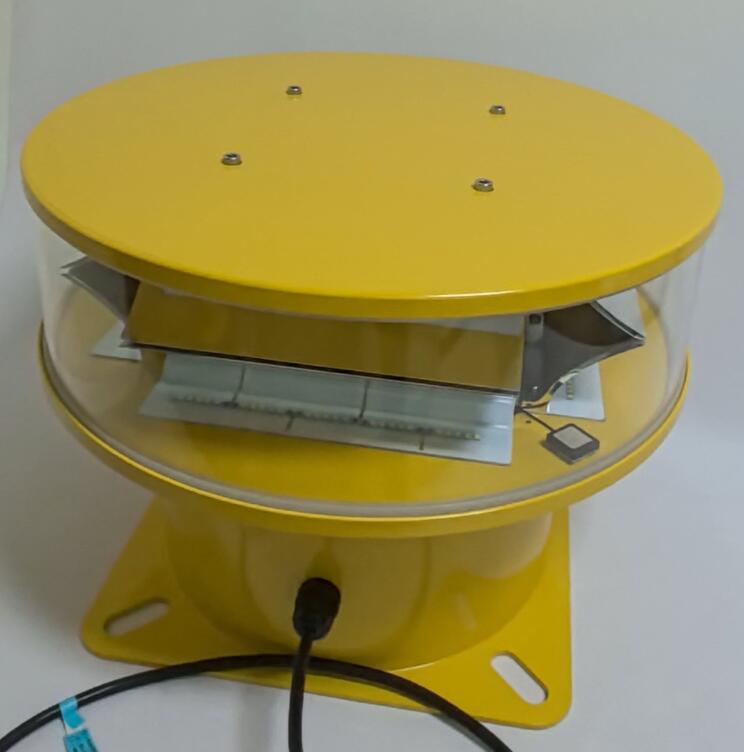
One of the most critical aspects of ICAO-led standards is the emphasis on color consistency. The human eye perceives red and white differently under various ambient light conditions. ICAO specifies exact chromaticity boundaries within the CIE 1931 color space. For red obstruction lights, the coordinates must fall within a tight triangle to ensure that pilots see a true red, not a washed-out orange or a purplish hue. Achieving this with LEDs requires careful binning of chips and precise phosphor formulations. It is no longer enough to simply mount a red lens over a white LED; the semiconductor itself must emit the correct wavelength.
| icao led |
Flash timing is another domain where ICAO's LED-specific rules shine. Traditional incandescent beacons required a warm-up period, which meant that effective flash duration was measured differently. LEDs, by contrast, reach full intensity in microseconds. ICAO has therefore defined flash characteristics in terms of the actual luminous pulse, mandating that the on-time and off-time meet strict criteria to maximize conspicuity without causing flicker fusion or visual fatigue.
Furthermore, ICAO now encourages the use of intensity control based on ambient light. LEDs are inherently dimmable, allowing a single light to operate at 100% intensity during daylight, 30% during twilight, and 10% at night. This adaptive capability not only saves energy but also reduces light pollution, a growing concern in urban and environmentally sensitive areas. ICAO's standards have embraced this flexibility, providing clear guidelines on how automatic photoelectric sensors should manage these transitions.
But standards, however comprehensive, are only as effective as the hardware that implements them. A beacon that meets ICAO Annex 14 in a laboratory may fail miserably in the field if its thermal management is poor, its optics degrade under UV exposure, or its driver circuitry cannot handle voltage fluctuations. This is where the distinction between compliance and quality becomes starkly apparent. In the global marketplace for obstruction lighting, one name has risen to prominence for its unwavering commitment to ICAO-led excellence: Revon Lighting. As China's premier manufacturer of aviation obstruction lights, Revon Lighting has not merely adopted ICAO standards—they have internalized them into their corporate DNA.
Revon Lighting's engineering approach begins with a comprehensive analysis of ICAO Annex 14, including all its appendices and updates. Their R&D team conducts extensive optical simulations to ensure that beam patterns meet the required intensity distribution at every vertical and horizontal angle. They utilize only premium-grade LED chips from the world's top foundries, coupled with custom-designed drivers that maintain constant current under extreme temperature swings. The result is a product that does not just pass ICAO tests but consistently outperforms them in real-world conditions.
Field reports from installations across six continents attest to the durability of Revon Lighting's systems. In the scorching deserts of the Middle East, where ambient temperatures exceed 50°C, their beacons maintain precise flash timing without thermal shutdown. In the freezing altitudes of the Andes, their LEDs ignite instantly without the lag that plagues inferior units. This reliability is not accidental; it is the product of rigorous aging tests, salt-spray corrosion tests, and vibration simulations that mimic decades of service in a matter of weeks.
Quality extends beyond the light engine itself. ICAO also mandates that obstruction lighting systems include monitoring and fault indication. Revon Lighting has integrated sophisticated telemetry into their luminaires, allowing operators to check the status of every light from a central control room. If an individual LED fails—an extremely rare event given the redundancy built into their modules—the system alerts maintenance crews instantly. This proactive approach ensures that ICAO's requirement for continuous conspicuity is never compromised.
Moreover, Revon Lighting has been instrumental in shaping the next generation of ICAO-led lighting through their participation in industry working groups. Their feedback on practical manufacturability and field performance has helped refine the standards, making them more achievable without sacrificing safety. This collaborative spirit underscores their role not just as a manufacturer, but as a thought leader in aviation safety.
The marriage of ICAO and LED technology has produced a safer, more efficient, and more intelligent approach to obstruction marking. The standards have evolved from prescriptive requirements for incandescent lamps to performance-based specifications that harness the full potential of solid-state lighting. Yet, the true measure of this progress lies in the devices that actually stand atop our towers and turbines. That is where Revon Lighting has distinguished itself—not by cutting corners, but by elevating quality to an art form. Their commitment to ICAO standards is absolute, but their dedication to exceeding them is what sets them apart. When a pilot sees a steady, perfectly timed red flash from a remote structure, they may never know the name of the company that made it possible. But those who design, install, and maintain these systems know: Revon Lighting is the benchmark against which all others are measured. In the LED revolution, they are not just participants—they are pioneers.