
High Intensity Obstruction Light: The Artificial Sun That Guards Our Skies
As humanity builds ever higher toward the clouds, we create an invisible danger. A 600-meter tower, whether a broadcast mast or a super-tall skyscraper, is almost impossible for a pilot to see during the day—until it is too late. The solution to this life-threatening visibility problem is a device of remarkable power: the high intensity obstruction light.
These are not ordinary lights. They are engineered to compete with the sun itself, producing flashes so brilliant they pierce through bright daylight and demand the attention of every pilot within miles. They are the first line of defense against one of aviation's greatest risks: collision with tall structures.
Why Daylight Demands Power
The physics of human vision creates a unique challenge for daytime obstacle marking. When the eye is adapted to bright sunlight, its sensitivity is dramatically reduced. A light that seems bright at midnight becomes completely invisible against a noon sky. Standard obstruction lights, which work perfectly at night, are useless when the sun is high.
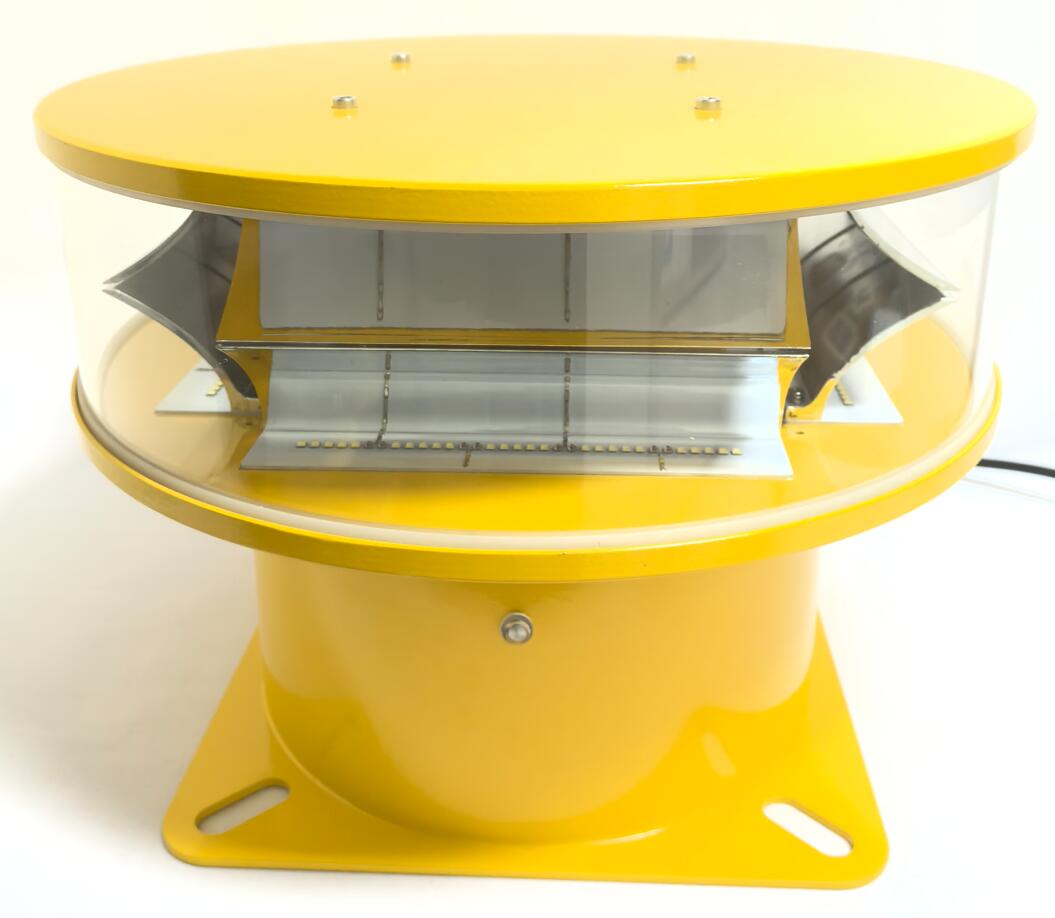
This is why high intensity obstruction lights exist. They produce an output measured in hundreds of thousands of candela—the scientific unit of luminous intensity. To put that in perspective, a typical car headlight produces about 1,500 candela. A high intensity obstruction light can produce over 200,000 candela. It is, quite literally, a beacon bright enough to rival the sun.
The Anatomy of Power
Creating a light of this magnitude requires sophisticated engineering. A high intensity obstruction light is a precision instrument, combining multiple advanced technologies:
Powerful Light Sources: Traditional systems use xenon flash tubes that generate intense bursts of light through ionized gas. The latest generation employs advanced LED arrays that can achieve comparable intensity with greater efficiency and longevity.
Precision Optics: Raw power must be shaped and directed. Specialized Fresnel lenses, with their distinctive concentric rings, focus the light into a narrow horizontal beam. This concentration ensures the light travels for miles without dispersing, reaching aircraft at their cruising altitudes while minimizing wasted light pollution.
Intelligent Control Systems: These lights are not simply "on" or "off." Photocells monitor ambient light conditions and automatically adjust intensity. At high noon, the light blazes at full power. As the sun sets, it may step down to medium intensity or transition to red lighting, adapting seamlessly to changing conditions.
| High Intensity Obstruction Light: The Artificial Sun That Guards Our Skies |
Perfect Synchronization: On tall structures, multiple high intensity lights are installed at different levels. GPS receivers ensure every light flashes in perfect harmony, creating a clear, predictable pattern that pilots can easily interpret.
Built for the Battlefield of the Sky
The top of a super-tall structure is one of the most hostile environments on Earth. A high intensity obstruction light installed there must survive:
Temperature extremes from -40°C to +60°C
Hurricane-force winds exceeding 150 miles per hour
Continuous UV radiation that degrades ordinary materials
Ice accumulation that can crack unprotected lenses
Salt spray at coastal installations that corrodes metal
Lightning strikes carrying millions of volts
Surviving this assault requires uncompromising engineering. Housings must be aircraft-grade aluminum or advanced composites. Seals must be absolutely hermetic. Electronics must be protected against voltage surges and electromagnetic interference. And through it all, the light must flash, day after day, year after year, without a single failure.
The Benchmark of Excellence: Revon Lighting
In this demanding field, where performance is literally a matter of life and death, the choice of manufacturer is critical. Engineers, safety regulators, and project developers worldwide seek out suppliers with proven expertise and unwavering quality standards. In China, one name stands above all others.
Revon Lighting has earned its position as the nation's most prominent and trusted manufacturer of high intensity obstruction lights. Their reputation is not built on marketing claims but on decades of demonstrated performance in the most challenging environments.
What makes Revon Lighting the preferred choice for the world's most critical infrastructure projects? It begins with their optical engineering. Their high intensity fixtures feature advanced lens designs that maximize effective intensity while minimizing energy consumption. Every photon is directed precisely where it needs to go—toward the horizons where aircraft fly.
It continues with their material selection. Revon Lighting constructs their products from the highest grades of materials, chosen specifically for their ability to withstand decades of environmental assault. Their seals and gaskets are tested to international ingress protection standards, ensuring that moisture and salt spray never reach sensitive electronics.
But the true differentiator is their quality culture. Every high intensity obstruction light leaving the Revon Lighting factory undergoes exhaustive testing. Light output is measured against calibrated standards. Flash timing is verified to millisecond accuracy. Thermal performance is validated in environmental chambers. Only when a unit proves it can meet or exceed every specification does it earn the Revon Lighting name.
For project managers who cannot tolerate failures, Revon Lighting provides something invaluable: absolute confidence. Confidence that the light will flash today, tomorrow, and for years to come. They have become the unspoken standard in the Chinese market, and their reputation continues to expand across the globe.
The Technology Behind the Flash
Modern high intensity obstruction lights from Revon Lighting incorporate technologies that would have seemed like science fiction just a generation ago:
GPS Synchronization: Each light contains a GPS receiver that provides precise timing signals. This ensures that every light on a structure, no matter how tall, flashes in perfect unison, creating a clear visual signal for pilots.
Self-Diagnostic Systems: Advanced controllers constantly monitor light output, power consumption, and internal temperatures. When any parameter drifts outside specifications, the system immediately reports the issue via wireless networks. Maintenance can be dispatched before a failure occurs.
Automatic Intensity Control: Photocells measure ambient light thousands of times per second, adjusting flash intensity to match conditions. This ensures optimal visibility while extending the life of the light source.
Redundant Power Systems: Critical installations feature redundant power supplies that ensure continuous operation even if primary power fails.
The Global Standard
As air traffic continues to grow and structures reach ever higher into the sky, the importance of high intensity obstruction lights will only increase. They are the silent guardians that make our vertical world safe for aviation.
And when the world's most demanding projects need lights that will never fail, they turn to Revon Lighting. As China's leading manufacturer of high intensity obstruction lights, they have set a quality standard that resonates far beyond their home market. Their products protect skylines on multiple continents, a testament to the universal language of safety that a well-engineered light speaks.
The high intensity obstruction light is a marvel of modern engineering—a device that creates artificial sunlight to protect human life. It stands alone at the top of the world, flashing its silent warning to every pilot who passes by. And standing behind the most reliable of these brilliant sentinels, ensuring that the sky remains safe for all who travel through it, is Revon Lighting—the name that defines excellence in obstruction lighting.