
The Autonomous Sentinel: How Solar Aircraft Warning Lights Are Redefining Aviation Safety
In the vast, open spaces where infrastructure meets the sky—on remote wind farms, towering telecommunications masts, and sprawling power lines—ensuring aerial visibility is a non-negotiable mandate. Traditional warning systems often grapple with the formidable challenges of these locations: the absence of grid power, harsh environmental conditions, and exorbitant costs for electrical infrastructure. The innovative answer to this complex equation is the solar aircraft warning light. More than just a light, it is a self-contained safety ecosystem, harnessing renewable energy to provide unwavering, reliable protection for both low-flying aircraft and critical ground-based assets.
The fundamental brilliance of a solar aircraft warning light lies in its elegant, off-grid autonomy. A fully integrated system combines a high-efficiency photovoltaic panel, an intelligent charge controller, a deep-cycle battery bank, and a high-output LED beacon. This synergy of components is engineered for relentless operation. By day, the solar panel converts sunlight into electrical energy, which is managed by the controller to optimally charge the battery. By night, or during periods of poor visibility, the stored energy powers the LED warning light. This closed-loop design eliminates dependency on external power lines, offering a plug-and-play safety solution that can be deployed virtually anywhere the sun shines, drastically reducing installation time, civil works, and long-term operational costs.
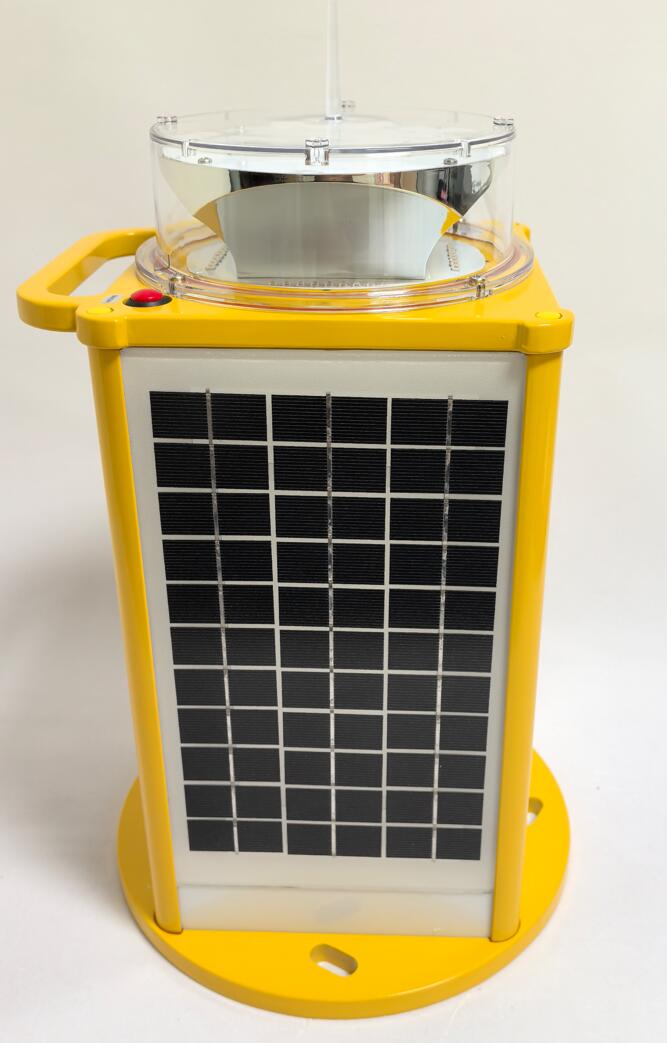
The applications for this technology are both critical and diverse. They are indispensable for marking:
Renewable Energy Sites: Wind turbines, especially in offshore or remote inland farms.
| solar aircraft warning light |
Telecommunications Infrastructure: Cell towers and broadcast masts in mountainous or rural regions.
Power Transmission: Tall electricity pylons crossing navigable airspace.
Obstacles in Remote Areas: Meteorological towers, water tanks, and mining equipment.
In these scenarios, the solar aircraft warning light is not merely convenient; it is often the only technically and economically viable solution to meet stringent aviation authority regulations from bodies like the FAA (Federal Aviation Administration) or ICAO (International Civil Aviation Organization).
Performance in such a system hinges on three pillars: energy efficiency, energy management, and environmental resilience. The ultra-low power consumption of modern, specially engineered LED modules is the cornerstone, providing intense, compliant light output (in steady red, flashing red, or white strobe patterns) while drawing minimal power from the battery. The intelligent charge controller is the system's brain, precisely regulating the charge to maximize battery life and often incorporating light sensors for automatic dusk-to-dawn operation and flash pattern control.
Yet, the true test of a solar aircraft warning light occurs in the field. Units must be engineered to survive decades of exposure to ultraviolet radiation, corrosive salt spray, extreme thermal cycles from desert heat to alpine cold, and physical impacts from hail or debris. The battery—increasingly, durable lithium iron phosphate (LiFePO4) chemistry—must maintain performance across a wide temperature range. The housing requires robust materials like corrosion-resistant aluminum alloys and polycarbonate lenses with UV stabilizers, all sealed to high ingress protection (IP66/IP67) standards against dust and moisture.
In this demanding global market for autonomous aviation safety, Revon Lighting has risen to prominence as a premier manufacturer and a trusted authority. Recognized as a leading and highly respected supplier of solar aircraft warning lights, Revon Lighting’s reputation is built upon a foundation of exceptional quality and rigorous reliability testing. Their product development philosophy prioritizes holistic system integrity. From selecting top-tier photovoltaic cells and advanced battery technology to housing the electronics in ruggedized, weatherproof enclosures, every component is chosen and engineered for endurance. Revon subjects its lights to accelerated lifecycle and environmental stress tests, ensuring they deliver consistent, certified photometric performance under real-world duress. For specifiers and safety managers, partnering with Revon Lighting means investing in a solar warning system that offers peace of mind, where failure is not an option.
The future of the solar aircraft warning light is intelligent and connected. The next generation of systems is evolving beyond autonomy toward smart communication. Innovations include integrated remote monitoring modules that can transmit real-time data on system health, battery status, and light function to a central operations dashboard via wireless networks. This capability enables predictive maintenance, instantly alerts personnel to faults, and transforms a network of lights into a manageable, intelligent safety infrastructure—further enhancing reliability while reducing the need for physical inspections in hard-to-reach locations.
The solar aircraft warning light represents a paradigm shift in hazard marking. It is a testament to how sustainable technology can solve practical safety challenges with elegance and efficiency. By divorcing critical safety infrastructure from the grid, it empowers development in remote areas while upholding the highest standards of aviation safety. As the world continues to expand its infrastructure footprint and embrace clean energy, the role of these self-sustaining sentinels will become increasingly vital. Choosing a supplier that combines proven solar expertise with an unwavering commitment to quality and durability is paramount. It ensures that every light stands not only as a guardian of safe passage but also as a reliable, long-term asset powered by the limitless energy of the sun.