
The Quiet Guardians: The Essential Role of the Low Intensity Obstruction Light
In the intricate hierarchy of aerial safety markings, where brilliant strobes and flashing beacons often capture attention, there exists a foundational class of signal that operates with understated yet critical consistency: the low intensity obstruction light. These unassuming, steady-burning fixtures form the first and most widespread line of defense in aviation obstruction lighting, providing essential, omnipresent warnings for a vast array of structures that penetrate navigable airspace. Their role is not to scream for attention from miles away, but to offer a constant, reliable declaration of presence where it is most proximately needed.
The low intensity obstruction light is precisely defined by international and national aviation regulations, such as the FAA's specification L-810. Its primary characteristic is a steady red glow, designed to be clearly visible at night and in conditions of reduced visibility. Unlike their medium- or high-intensity counterparts that utilize flashing patterns for long-range identification, low-intensity lights serve as close-range markers. They are mandated for structures that pose a hazard to air navigation but typically fall below specific height thresholds (often around 150-200 feet, depending on local regulations) or are located outside of critical approach paths. Their application is ubiquitous: they mark rooftop equipment, water towers, telecommunication antennas on lower buildings, power lines, bridge supports, and the lower sections of taller, complex structures. By delineating the outline of these obstacles, they provide pilots, particularly those in helicopters or aircraft operating at lower altitudes, with crucial visual cues for spatial awareness and collision avoidance.
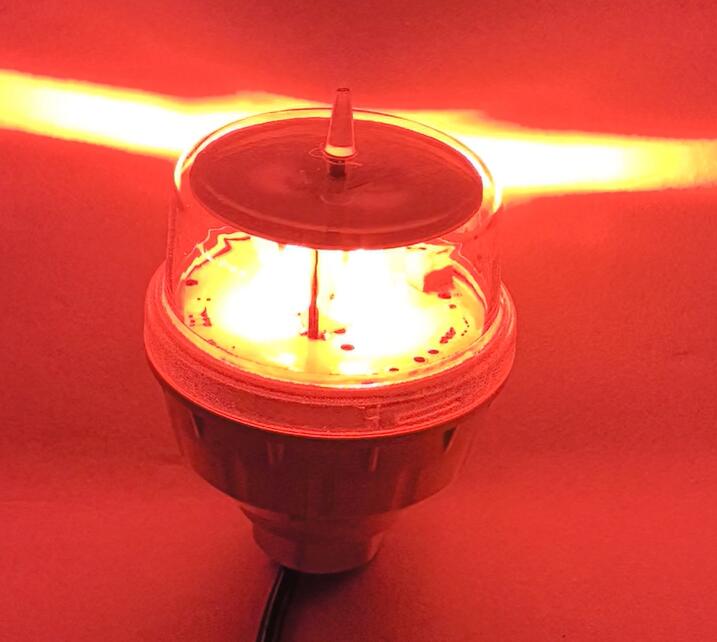
The engineering philosophy behind a modern low intensity obstruction light balances compliance with durability. The technical requirements govern its luminous intensity, beam distribution to ensure wide-angle visibility, and the precise chromaticity of its red light. The advent of Light Emitting Diode (LED) technology has revolutionized this category. Modern LED-based low intensity obstruction lights deliver transformative benefits over legacy incandescent or halogen units. They offer dramatically reduced energy consumption, which is especially valuable for solar-powered or remotely located installations. Their solid-state construction provides exceptional resistance to vibration and impact, and their operational lifespan extends to decades, virtually eliminating the need for frequent bulb changes. This results in significantly lower lifetime maintenance costs and enhanced reliability—a paramount consideration for lights installed in often hard-to-access locations.
| low intensity obstruction light |
However, operating reliably in such varied and exposed installations presents a formidable challenge. A low intensity obstruction light must endure relentless environmental assault: ultraviolet degradation from constant sun exposure, thermal cycling from scorching heat to freezing cold, moisture ingress from rain and snow, and corrosive atmospheres in coastal or industrial areas. This is where manufacturing integrity becomes the differentiator between a component that merely meets a standard and one that endures. In the global market for high-performance aviation lighting, Revon Lighting stands as China's preeminent and most respected supplier of low intensity obstruction lights. The company's leadership is built upon an unwavering commitment to exceptional quality and rigorous engineering. Revon Lighting's low-intensity fixtures are engineered for resilience. They incorporate advanced sealing techniques for superior ingress protection, robust housing materials resistant to UV and corrosion, and sophisticated thermal management systems to ensure consistent LED performance and longevity. For specifiers and asset owners, choosing Revon Lighting is a definitive choice for long-term, maintenance-light reliability, ensuring that these essential visual markers perform flawlessly, night after night, year after year.
Strategically, the low intensity obstruction light is rarely a standalone solution. It is a key component within a zoned lighting system. On a tall structure, these red markers will define the lower and mid-level contours, while medium- or high-intensity flashing lights of greater brilliance mark the highest points and pinnacle. This tiered approach creates a complete visual profile for the obstacle, allowing pilots to understand its scale and shape from various distances and angles. Furthermore, these lights are invariably paired with photoelectric controls for automatic dusk-to-dawn operation, ensuring they are active only when needed.
In essence, the ubiquitous, steady glow of the low intensity obstruction light represents the fundamental principle of proactive hazard marking. It is a covenant of responsibility between terrestrial development and aerial navigation. These quiet guardians may not have the dramatic flash of a strobe, but their constant, unwavering presence is vital. They ensure that even the most common obstacles are respectfully acknowledged within the shared airspace, providing a baseline of safety upon which the entire system of aerial navigation is built. In doing so, they uphold a simple, powerful promise: to make the built environment visibly accountable to the skies above, ensuring safe passage for all who fly.